Shahdag peoples
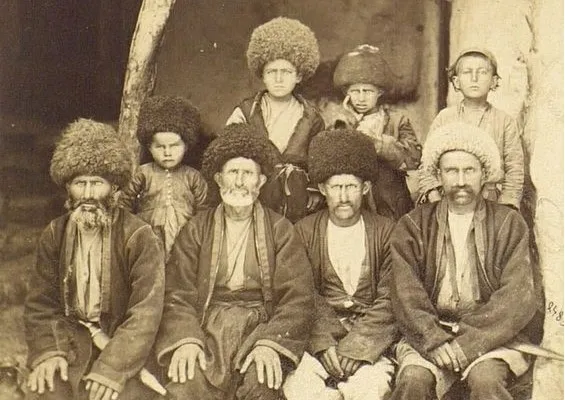 Analysis of the Mountain Population of the Azerbaijani
Mountains and Their Cultures
Leyla Afandiyeva
School of Design, Western Caspian University, Baku, AZ1072, Azerbaijan
Abstract. The article is devoted to a comprehensive analysis of the lifestyle, ethnic composition, household
characteristics and socio-economic activities of the population living in the mountainous regions of Azerbaijan. The
study comprehensively examines the impact of the natural and geographical features of the mountain environment on
the living culture and economic activities of the local population. The first section analyzes the natural conditions,
climatic characteristics of mountainous areas, and the impact of this environment on the organization of human life.
The second section examines the settlement areas, ethnic composition and demographic characteristics of the minority
peoples and ethnic groups living in the mountainous regions of Azerbaijan. The third section is devoted to the
traditional living culture of the mountain population, including household characteristics, the structure of settlements,
architectural traditions, customs and traditions, and the system of social relations. The fourth section analyzes the
economic activities of the mountain population - pasture and winter cattle breeding, mountain agriculture, horticulture,
folk crafts, as well as the recently developing tourism and service sectors. At the same time, the socio-economic
problems of mountain regions, migration processes and employment issues are also in the spotlight. The final section
emphasizes the importance of preserving the traditional lifestyle and ethnocultural heritage of mountain populations,
discusses the issues of efficient use of natural resources, preservation of ecological balance, and strengthening the
potential of local communities for the sustainable socio-economic development of regions. The article notes that
preserving the social stability and cultural diversity of mountain communities is one of the main conditions for the
sustainable development of these territories.
Keywords: Azerbaijani mountains, mountain population, minority peoples, ethnic diversity, living culture, traditional
economy, mountain villages, socio-economic development, ethnocultural heritage, sustainable development
Received: 26.12.2025 Accepted: 06.01.2026 Published: 28.01.2026
https://doi.org/10.54414/DLAM6601
Copyright: © 2026 by the authors. Licensee: The Research Journal of Mountains: Biodiversity, Landscapes and
Cultures, Western Caspian University, Baku, Azerbaijan. This article is an open access article distributed under the
terms and conditions of the Creative Commons Attribution 4.0 International License (CC BY 4.0)
(https://creativecommons.org/licenses/by/4.0/).
1. Introduction
Located at the crossroads of Eastern Europe and Western Asia, the mountains of Azerbaijan represent a
unique ecosystem with diverse flora and fauna. This geographical location, rich culture and ancient
traditions of the local population make the mountainous regions of the country an object of scientific
research and ecological care. In this article, we will look at the flora and fauna of the region, the
characteristics of the ecosystem, the life of the mountain population and its economic aspects. Located at
the crossroads of different climatic and geographical zones, the mountainous regions of Azerbaijan are
distinguished by their outstanding biodiversity. Unique ecosystems formed at different altitudes create
ideal conditions for the life of many plant and animalspecies. In this article, we will take a detailed look at
the flora and fauna of the Azerbaijani mountains, highlighting the main characteristics and importance of
these ecosystems. The mountainousregions of Azerbaijan are unique not only in terms of nature but also
in terms of culture. The population of these regions is distinguished by its rich historical heritage,
51
The Research Journal of Mountains: Biodiversity,
Landscapes and Cultures Vol 1, № 1, 2026
diversity of ethnic groups, and unique customs and traditions.
In this article, we will consider the daily life, culture, economic activities, problems and
development prospects of the mountain population. The economy of the mountainous regions of
Azerbaijan is very diverse and specific due to the unique natural conditions and the customs and traditions
of the local population. These areas have great potential for development, but face a number of challenges.
This article will review the main sectors of the economy, the characteristics and prospects of the
mountainous regions of Azerbaijan.
2.Ethnic composition of the mountain peoples of Azerbaijan
The peoples living in the mountainous areas of Azerbaijan belong to the Caucasian language family and
are densely settled in some villages and regions. The following ethnic groups can be attributed to this
population: the Shahdag peoples (Khinaliqs, Grizs, Budugs), Haputs, Jaks, etc. Along with them, the
Lezgins, Avars, Sakhurs, Ingiloys and Udins (relatively in the foothill zones) were settled. The vast
majority of these peoples are considered ancient aboriginal peoples and have inhabited the mountainous
regions of the Caucasus for hundreds of years. Their compact settlement has played an important role in
preserving their ethnic identity. When studying the ethnic composition of Azerbaijan, the correct scientific
explanation of the concepts of "nation", "people", "minority", "national minority" and "ethnic minority"
is of particular importance. These concepts are socio- ethnic categoriesthat have been formed in the process
of historical development and express different histories of social unity. The mountainous areas of
Azerbaijan have played an important role in preserving ethnic diversity (Center for Strategic Studies under
the President of the Republic of Azerbaijan, 2014).
In terms of time, it was one of the earliest forms of population associations, arising as a result of the
unification of kin, tribes, and clans. This process was mainly associated with the development of social
division of labor, trade, and social relations. The population emerged later, during the formation of
capitalist relations. The main characteristics of the nation are a common territory, literary language,
culture, economic life, and spiritual unity.
The concept of national minority applies to ethnic groups that live in the territory of a state, but
are numerically smaller than the main population. For example, just as our compatriots living in other
countries are considered national minorities in those states, representatives of other people living in
Azerbaijan also have the status of national minorities.
In contrast, minority peoples are ethnic groups that have historically been considered the
indigenous population of a given territory and live mainly in compact groups. Although their numbers are
small, their main characteristic is that they have settled collectively in certain regions while preserving
their historical and cultural characteristics. The ethnic composition and national diversity of Azerbaijan
have historically been formed in a tolerant environment (Guliyev, 2012). Ethnic minorities are special
groups separated from larger ethnic groups and formed as a result of historical and ethnic processes.
Although these groups preserve their own language, customs, traditions and spiritual characteristics, they
can also absorb certain cultural elements from neighboring peoples under the influence of the environment
in which they live. This is considered a natural result of ethnic interaction. Thus, various ethnoses living
in Azerbaijan - national minorities, small peoples and ethnic groups - both preserve their ethnic
characteristics and integrate into the general socio-cultural environment. This process is considered
one of the main indicators of the historically formed poly-ethnic structure and ethnic diversity of
the country.
3.Settlements of small peoples and ethnic minorities in the mountainous regions of Azerbaijan
Geographical conditions, especially mountainous areas, have played an important role in shaping the ethnic
map of Azerbaijan. The complexity of the natural and geographical environment, difficult-to- navigate
52
The Research Journal of Mountains: Biodiversity,
Landscapes and Cultures Vol 1, № 1, 2026
mountain ranges and isolated settlements have created conditions for a number of small peoples and ethnic
groups to live for a long time, preserving their languages, customs and cultural characteristics. In general,
these ethnic groups are compactly settled mainly in the northeastern and northwestern mountainous
zones of the Greater Caucasus, as well as in some southern mountainous areas.
3.1. Northeastern zone of the Greater Caucasus (Guba–Gusar–Khizi region)
One of the most ethnically diverse mountainous regions of Azerbaijan is the northeastern part of the
Greater Caucasus. This region is home to a particularly small number of peoples, the so-called Shahdag
ethnic group. The peoples belonging to the Shahdag ethnic group are compactly settled in the northeastern
part of the Greater Caucasus (ANAS, 2007). They include the following: Khinalıgılı (Khinalıg village of
Guba region), Gryzlar, Buduglar, Haputlar, Ceklar). These peoples have formed in a long period of natural
isolation, living in high mountainous areas, in villages located at a considerable height above sea level.
Their languages belong to the Caucasian language family, and each has its own distinct ethnic
characteristics. This region also constitutes the oldest and most archaic layer of Azerbaijan's ethnic
diversity.
3.2. Northwestern zone of the Greater Caucasus (Zagatala–Balakan–Gakh region)
This mountainous zone is inhabited mainly by the following small peoples: Avars, Sakhurs, Ingiloys. These
ethnic groups live compactly on the southern slopes of the Greater Caucasus, in foothill and midmountainous villages. Their economy is mainly based on mountain agriculture, cattle breeding and
gardening. Geographical conditions have influenced the preservation of their traditional way of life and
community relations.
3.3.Southern slopes and northern regions of the Greater Caucasus
One of the most widespread ethnic groups in these areas is the Lezgins. They live mainly in the
mountainous and foothill zones in the direction of Gusar, Guba, and partly in the direction of Shamakhi.
The Lezgins belong to the Caucasian language family and are considered one of the largest minorities in
the region.
3.4.Southern mountainous zone (Talysh Mountains)
The Talysh Mountains in southern Azerbaijan are home to the Talysh people, who belong to the Iranian
language group and are compactly settled in the Lerik, Yardimli, and mountainous Lankaran regions. The
mountainous and forested terrain of this region has allowed the Talysh people to preserve their unique
lifestyle and cultural characteristics. The living culture of the Talysh and other mountain peoples has
developed in accordance with the natural and geographical conditions (National Atlas of Azerbaijan,
2014).
4.Historical-ethnographic significance
Many of the minority peoples living in mountainous areas exist only in Azerbaijan on the world's ethnic
map. Their compact and isolated existence gives reason to characterize these ethnoses as a kind of “living
ethnographic museum.” These peoples have both preserved their local ethnic characteristics and, over
time, have integrated into the general socio-cultural system of Azerbaijani society.
5.The culture of life adapted to the mountain life of the minority peoples living in the mountainous
areas of Azerbaijan
The lifestyle of the small peoplesliving in themountainousregions of Azerbaijan wasshaped by the natural
and geographical environment they lived in. Harsh climatic conditions, complex relief, limited land
resources, and isolated settlements determined the economic activities, architecture, lifestyle, and social
relations of these peoples. Each ethnic group has developed a unique living culture suited to the mountain
environment.
53
The Research Journal of Mountains: Biodiversity,
Landscapes and Cultures Vol 1, № 1, 2026
The Khinalıg people live in the village of Khinalıg, located in the high mountainous zone of the
Greater Caucasus, at an altitude of more than 2,000 meters above sea level. The main feature of their
living culture is adaptation to the harsh climate. The houses are built of stone, their roofs are flat, and the
roof of one house serves as a courtyard for another. The main occupation is sheep and cattle breeding.
Preparing food and fuel reserves for the winter is an important part of the lifestyle. Community relations
and traditions of mutual assistance are strongly preserved.
6.Griz, Budug and other Shahdag Peoples
The peoples of the Shahdag ethnic group, such as the Gryz, Budug, Haput, and Cek, are compactly settled
in the northeastern part of the Greater Caucasus, mainly in the high and medium-mountainous areas of the
Guba region. Theirsettlements are located at a considerable height above sea level, and the complex relief,
harsh climatic conditions, and long winter season have had a significant impact on the formation of the
lifestyle of these peoples. As a result of geographical isolation, they were able to preserve their language,
traditions, and ethnic characteristics for a long time.
The basis of the traditional economic activity of the Shahdag peoples is semi-nomadic cattle
breeding. Sheep breeding and partly cattle breeding occupy a leading place in their economic life. In the
summer months, the herds are taken to high mountain pastures, and in the autumn and winter they are
returned to lower areas. This seasonal movement system was formed in accordance with their division of
labor, family life and household traditions. Along with this, mountain farming has also developed on
limited land areas. In order to prevent soil erosion on mountain slopes and to use the fields efficiently,
terrace farming is carried out. Mainly grain, potato and vegetable growing are widespread.
The mountainous environment has also influenced the architecture and structure of these peoples'
settlements. Villages are usually located in a stepped pattern on mountain slopes, and houses are built of
local stone. Thick walls and small windows serve to preserve heat in cold climates. Houses and
outbuildings are placed close to each other, making efficient use of land and ensuring comfortable living
in winter conditions.
Home crafts occupy an important place in the daily and cultural life of the Shahdag people. Wool
processing, spinning, weaving, carpet and palazzo making are widespread. These products are made both
for daily use and decorated with traditional patterns and ornaments reflecting the aesthetic taste of the
people. Preparing food and fuel reserves in advance for the winter season is one of the important features
of their living culture.
In terms of social relations, family and community ties are very strong among these people.
Collective labor, mutual assistance, joint economic activity, and community solidarity have formed as
important social mechanisms for living in mountain conditions. Hospitality, respect for elders, and
preservation of traditional values are the main features of their spiritual culture. Thus, the living culture
of the Shahdag peoples was formed as a result of adaptation to the natural-geographical environment and
has preserved its unique ethnic characteristics to this day.
The Lezgins are one of the largest minorities in Azerbaijan, settled mainly in the northeastern part
of the Greater Caucasus - in the mountainous and foothill areas of the Gusar, Guba, Khachmaz regions,
as well as partially in the direction of Shamakhi and Ismayilli. Their habitat mainly covers mountain
slopes, river valleys and foothill zones. This natural and geographical environment has had a significant
impact on the formation of the Lezgins' economic activities, livelihoods, and overall lifestyle.
A multi-sectoral economic system has been formed in the traditional mountain culture of the
Lezgins. Agriculture has been one of the main occupations, and the land on the mountain slopes and river
valleys has been used efficiently. Grain, potato and vegetable growing were widespread. In addition,
horticulture and fruit growing played an important role, especially the cultivation of apples, pears, walnuts
and other fruit trees. Livestock breeding, especially sheep and cattle breeding, was an integral part of
54
The Research Journal of Mountains: Biodiversity,
Landscapes and Cultures Vol 1, № 1, 2026
agriculture, and high mountain pastures were used in the summer months.
Irrigation systems were created in settlements located near mountain rivers, and water was
delivered to agricultural fields through ditches and canals. This was one of the important factors ensuring
the sustainability of agriculture in mountainous conditions. Lezgins formed an economic model adapted
to the mountain environment by efficiently using natural resources.
Architecturally, Lezgin houses are built from local materials - stone and wood. Villages located
on mountain slopes are built in a stepped manner according to the relief. The thick stone walls of the
houses serve to protect against the cold of winter, and special areas are allocated in the courtyards for farm
buildings and livestock. The planning of the villages wasin accordance with the principles of both defense
and efficient land use.
Family and kinship relations play an importantrole in the social life oftheLezgins. The large family
model, respect for elders, traditions of hospitality and mutual assistance are the main elements of their
spiritual culture. Collective labor, especially joint activity in sowing, harvesting and construction, has
strengthened community solidarity. Folk crafts, including weaving, wool processing and the manufacture
of various household items, are also an integral part of the material culture of the Lezgins.
Thus, the mountain culture of the Lezgins was formed as a result of adaptation to natural and
geographical conditions, characterized by diversified economic activity, unique architectural traditions,
and a strong system of social relations. These features play an important role in preserving their ethnic
identity and enriching the overall ethnocultural diversity of Azerbaijan.
The Avars are mainly settled in the mountainous areas of the Zagatala and Balakan regions. Their
economy is based on mountain farming, cattle breeding and gardening. Terraces have been created on the
mountain slopes to make efficient use of the land. Avar villages are usually densely populated and consist
of stone houses. Community solidarity, respect for elders and traditional family values play an important
role in their socio-cultural life.
The Sahurs are one of the few peoples compactly settled on the southern slopes of the Greater
Caucasus, mainly in the mountainous and foothill areas of the Gakh and Zagatala regions. Their habitat
mainly covers high and medium-mountainous zones with complex relief, cool climate and rich summer
pastures. These natural and geographical conditions have had a direct impact on the formation of the
economic activities and lifestyle of the Sahurs in general. The basis of the traditional culture of the Sahurs
was semi-nomadic cattle breeding. The majority of the population was engaged in sheep and cattle
breeding, during the warm months of the year some families moved with their herds to high mountain
pastures, and in the autumn and winter they returned to lower and milder winter pastures. The pasturewinter system was not only a form of economy, but also played an important role in the formation ofsocial
relations, family division of labor and household traditions.
The mountainous conditions also influenced the planning and architectural features of the Sahur
settlements. The villages were mainly built onmountain slopes, taking into account the danger of landslides
and floods, in a stepped form in accordance with the relief. The houses are built of stone, a local building
material, with thick walls and small windows to help retain heat. Since courtyard areas are limited, farm
buildings and residential buildings are placed close together.
In addition to cattle breeding, the traditional economy of the Sahurs also included limited
mountain farming. Mainly grain, potato and vegetable growing were developed, and the land was
effectively used on the mountain slopes by terrace method. Preparing food reserves in advance for the
winter season was one of the important elements of their domestic culture.
Household crafts and folk crafts occupy a special place in the material culture of the Saxur people.
Wool processing, yarn spinning, carpet and palazzo weaving, and felt making are widespread. These
55
The Research Journal of Mountains: Biodiversity,
Landscapes and Cultures Vol 1, № 1, 2026
products both meet household needs and are rich in national ornaments and patterns reflecting aesthetic
taste. The manufacture of simple household tools on wood and stone is also included in traditional art
forms. In terms of socio-cultural life, community relations, mutual assistance and collective labor
traditions occupy an important place among the Sakhurs. Respect for elders, hospitality and the strength
of family ties form the basis of their system of moral values. Thus, the living culture of the Sakhurs was
formed as a result of adaptation to the mountain environment and has been preserved to this day through
the interaction of natural conditions, economic activity and ethnic traditions.
The Ingiloy live in the foothills and mid-mountain zones of the Greater Caucasus. Their main
occupation is agriculture, viticulture, and gardening. The efficient use of mountain and forest resources is
an important feature of their economic system. Family and religious traditions, as well as social solidarity
within the village community, occupy a special place in their culture. The Talysh live in the mountainous
areas of the Talysh Mountains with a forested and humid climate. Their living culture has been formed in
accordance with the subtropical climatic conditions. The main occupations are tea growing, vegetable
growing, gardening and cattle breeding. The living culture of the Talysh and other mountain peoples has
developed in accordance with the natural and geographical conditions (National Atlas of Azerbaijan,
2014). Houses made of wood and stone are built in a special structure to protect against moisture. Forestry
and the use of natural resources play an important role in the life of the Talysh. The mountainous
environment has had a direct impact on the economic activities and living culture of the minority peoples
(Mustafayev, 2010).
7.Conclusion
The analysis shows that the mountainous regions of Azerbaijan have played an important role in
preserving the country's ethnic and cultural diversity. The northeastern and northwestern parts of the
Greater Caucasus, as well as the Talysh Mountains, were the main areas of compact settlement of small
peoples and ethnic groups. The complex relief, natural-geographic isolation and harsh climatic conditions
created conditions for these peoples to preserve their languages, customs, everyday life features and
system of social relations for a long time.
The mountain environment had a direct impact on the formation of the living culture of these
ethnoses. Stone architectural traditions, terrace farming,semi-nomadic orsedentary cattle breeding, winter
stock-raising habits, collective labor and strong community relations constitute the main features of the
lifestyle of these peoples. These features are an indicator of their adaptation to the natural environment
and their ability to live in ecological balance.
At the same time, small peoples and ethnic groups, while preserving their unique cultural identity,
have become integrated into the general Azerbaijani socio-cultural environment and have become an
integral part of the country's unified socio-cultural system. This process can be assessed as an important
indicator of the historically formed traditions of tolerance and poly-ethnic structure of Azerbaijan. Thus,
the mountain peoples of Azerbaijan are of particular importance not only from an ethnographic point of
view, but also in terms of enriching the national and cultural heritage. The study, preservation and
transmission of their material and spiritual culture to future generations is considered one of the important
scientific and social tasks for the sustainable development of the country's multicultural values.
References
1. Alekberov, F. (2009). Azerbaijan’s mountain peoples and their ethnocultural characteristics
[Azərbaycanın dağ xalqları və onların etnomədəni xüsusiyyətləri]. Elm.
2. Aliyeva, N. (2016). Azerbaijan’s multicultural environment and ethnic diversity [Azərbaycanın
multikultural mühiti və etnik müxtəliflik]. Təhsil.
3. Azerbaijan Milli Atlası [National Atlas of Azerbaijan]. (2014). Kartoqrafiya Fabriki.
4. Azerbaijan National Academy of Sciences. (2007). Ethnography of Azerbaijan [Azərbaycan
56
The Research Journal of Mountains: Biodiversity,
Landscapes and Cultures Vol 1, № 1, 2026
etnoqrafiyası] (3 vols.; T. Bünyadov, Ed.). Sharq-Qarb.
5. Azerbaijan Republic State Statistical Committee. (2019). National composition of the population of
Azerbaijan [Azərbaycan əhalisinin milli tərkibi].
6. Bunyadov, Z., & Yusifov, Y. (2007). History of Azerbaijan (From ancient times to the 20th
century) [Azərbaycan tarixi (ən qədim dövrlərdən XX əsrə qədər)]. Azərnəşr.
7. Center for Strategic Studies under the President of the Republic of Azerbaijan. (2014). Ethnic
minorities and national minorities of Azerbaijan [Azərbaycanın azsaylı xalqları və milli azlıqları].
8. Cornell, S. E. (2005). Small nations and great powers: A study of ethnopolitical conflict in the
Caucasus. Routledge.
9. Guliyev,A. (2012). Ethnic composition and national relations of Azerbaijan [Azərbaycanın etnik tərkibi
və milli münasibətlər]. Elm və Təhsil.
10. Mustafayev, S. (2010). Ethnography of the peoples of the Caucasus [Qafqaz xalqlarının
etnoqrafiyası]. Elm və Təhsil.
11. UNESCO. (2012). Cultural diversity and ethnic minorities in the Caucasus. Paris.
12. Wixman, R. (2017). Peoples of the USSR: An ethnographic handbook. Routledge.